


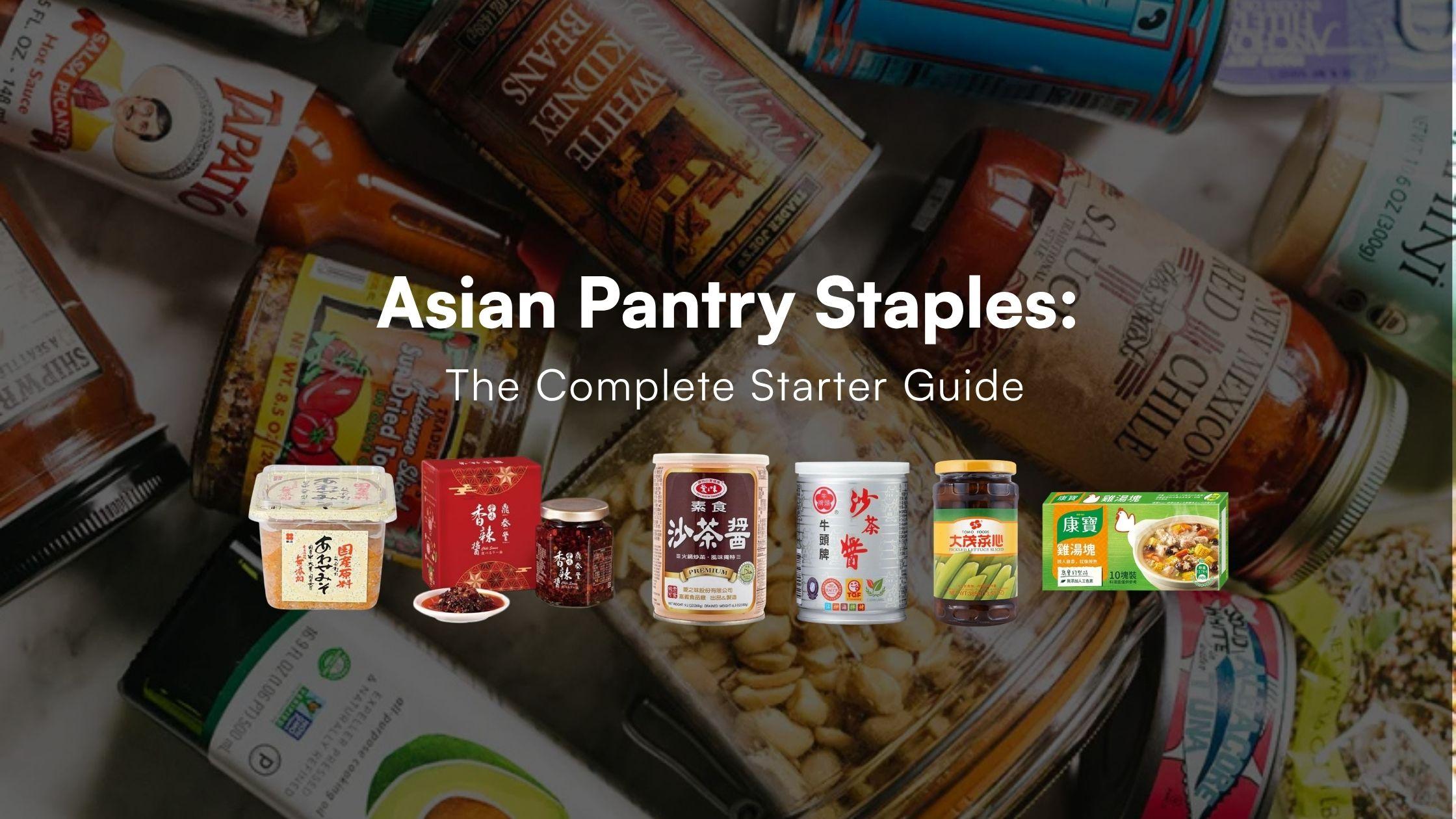
An Asian pantry is a small set of fermented sauces, oils, and dry goods that do the heavy lifting in everyday Chinese, Taiwanese, Japanese, and Korean cooking. Master about a dozen of them — soy sauce, miso, chili crisp, sesame oil, rice vinegar, oyster/vegetarian stir-fry sauce, doubanjiang, dried aromatics, and a few noodles and stocks — and you can cook the majority of weeknight Asian dishes without a special trip. This guide explains what each staple does, how to choose between the confusing varieties, and the order to buy them in if you're starting from an empty shelf.
What counts as an “Asian pantry staple”?
A staple is an ingredient that shows up across many dishes and keeps for months, so buying it once unlocks dozens of meals. The core divides into four jobs: salt and umami (soy sauce, miso, fish sauce, oyster/stir-fry sauce), heat and aromatics (chili crisp, doubanjiang, chili sauce, dried garlic/shallot), acid and fat (rice vinegar, toasted sesame oil), and base carbs and stock (rice, instant and dried noodles, bouillon). Most “how do I cook this?” questions come down to combining two or three of these. You don't need an Asian grocery in your city — these all ship shelf-stable.
The 12 staples worth owning
| Staple | What it does | Buy first? | At Ding-Go |
|---|---|---|---|
| Soy sauce | Primary salt + umami; dipping, braising, stir-fry | Yes | See the Soy Sauce Types guide |
| Miso paste | Fermented umami for soup, marinades, dressings | Yes | Shinjyo Blended Miso 500g |
| Toasted sesame oil | Finishing aroma, dressings (not for frying) | Yes | Pantry collection |
| Rice vinegar | Mild acid for dressings, pickles, dipping | Yes | Pantry collection |
| Chili crisp / chili sauce | Crunchy or smooth heat + umami topping | Yes | Din Tai Fung Chili Sauce 170g |
| Doubanjiang (chili bean paste) | Fermented chili-bean base for mapo tofu, braises | Soon | Pantry collection |
| Oyster / vegetarian stir-fry sauce | One-bottle savory glaze for greens & stir-fries | Soon | AGV Vegetarian Satay Sauce 260g |
| Sha cha / barbecue sauce | Savory dried-seafood-and-garlic paste; hot pot, marinades | Soon | Bull Head Barbecue Sauce 240g |
| Soybean / zhajiang paste | Savory-sweet minced sauce for noodles | Optional | Wei Lih Jah Jan Fried Sauce 175g |
| Bouillon / soup base | Instant stock for soups and noodle broths | Soon | Knorr Chicken Bouillon Cubes 100g |
| Instant & dried noodles | 10-minute meal base | Yes | Instant noodles collection |
| Pickled vegetables | Tangy crunch to finish rice bowls & congee | Optional | Tomo Pickled Lettuce 385g |
Which staples should a beginner buy first?
Start with five: soy sauce, toasted sesame oil, rice vinegar, miso, and one chili condiment. Those five cover salt, aroma, acid, fermented depth, and heat — the five levers behind most Asian flavor. With just these you can dress vegetables, season fried rice, make a quick miso soup, build a dipping sauce, and upgrade instant noodles. Add doubanjiang, a stir-fry sauce, and bouillon next; treat dried aromatics, pickles, and specialty pastes as you grow into specific dishes.
How do I choose between all the varieties?
Pick by use, not by brand prestige. A few rules that resolve most of the confusion:
Soy sauce: light vs dark vs all-purpose
Light (regular) soy sauce is your everyday seasoning; dark soy sauce is thicker, less salty, and used mainly for color in braises. For one bottle, choose a naturally brewed all-purpose soy sauce. The full breakdown — including gluten-free tamari and low-sodium options — is in our Soy Sauce Types guide.
Miso: white vs red vs blended
White (shiro) miso is sweeter and milder for everyday soup and dressings; red (aka) miso is saltier and deeper for heartier dishes; a blended (awase) miso splits the difference and is the easiest single jar to own. See the Miso Types guide for exact uses.
Chili condiments: crisp vs sauce vs bean paste
Chili crisp is crunchy and goes on top of finished food; a smooth chili sauce (like Din Tai Fung's) is for dipping and mixing into noodles; doubanjiang is a cooking base you fry at the start of a dish. They're not interchangeable — most kitchens eventually keep one of each.
How long do these last, and how do I store them?
Most unopened bottles keep 12–24 months; once opened, refrigerate anything fermented or made with fresh aromatics. Soy sauce, vinegar, and sesame oil are fine in a cool cupboard but last longest chilled. Miso, doubanjiang, chili crisp, and oyster/stir-fry sauces should go in the fridge after opening and will hold for months. Dried noodles, rice, and bouillon are shelf-stable for a year or more. When in doubt, refrigerate — cold only slows the fermentation that's already preserving the product.
Build your Asian pantry at Ding-Go
Ding-Go ships imported Taiwanese, Japanese, and Korean staples across the US — the real brands diaspora households actually keep on the shelf, not generic substitutes. Start with the miso and chili sauce above, add a stir-fry sauce and sha cha, and round it out from the pantry collection.
Go deeper: Soy Sauce Types Explained · Miso Types Explained · What Is Luosifen?
FAQ
What are the most essential Asian pantry staples?
The five essentials are soy sauce, toasted sesame oil, rice vinegar, miso paste, and one chili condiment. Together they cover salt, aroma, acid, fermented umami, and heat — the foundation of most Chinese, Taiwanese, Japanese, and Korean home cooking.
What's the difference between light and dark soy sauce?
Light (regular) soy sauce is thinner, saltier, and used for everyday seasoning and dipping. Dark soy sauce is thicker, slightly sweet, and used mainly to add deep brown color to braises and stir-fries. If you only buy one, choose a naturally brewed all-purpose soy sauce.
Is chili crisp the same as chili sauce?
No. Chili crisp is a crunchy, oil-based topping with fried chili and aromatics that you spoon over finished food. Chili sauce is smooth and used for dipping or mixing into noodles. Doubanjiang, a third option, is a fermented chili-bean paste used as a cooking base.
Do Asian pantry staples need to be refrigerated?
Unopened, most keep 12–24 months in a cupboard. After opening, refrigerate fermented products and anything with fresh aromatics — miso, chili crisp, doubanjiang, and oyster/stir-fry sauces. Soy sauce, vinegar, and sesame oil can stay in a cool cupboard but last longer chilled.
Can I cook Asian food without a nearby Asian grocery store?
Yes. Every staple in this guide is shelf-stable and ships nationwide. Stores like Ding-Go carry the authentic imported brands diaspora cooks use, so you can stock a full pantry online without a special trip.
What's a good gluten-free option for soy sauce?
Tamari is the standard gluten-free substitute for soy sauce — it's brewed with little or no wheat and has a similar savory depth. Always check the label, as recipes vary by brand.


