


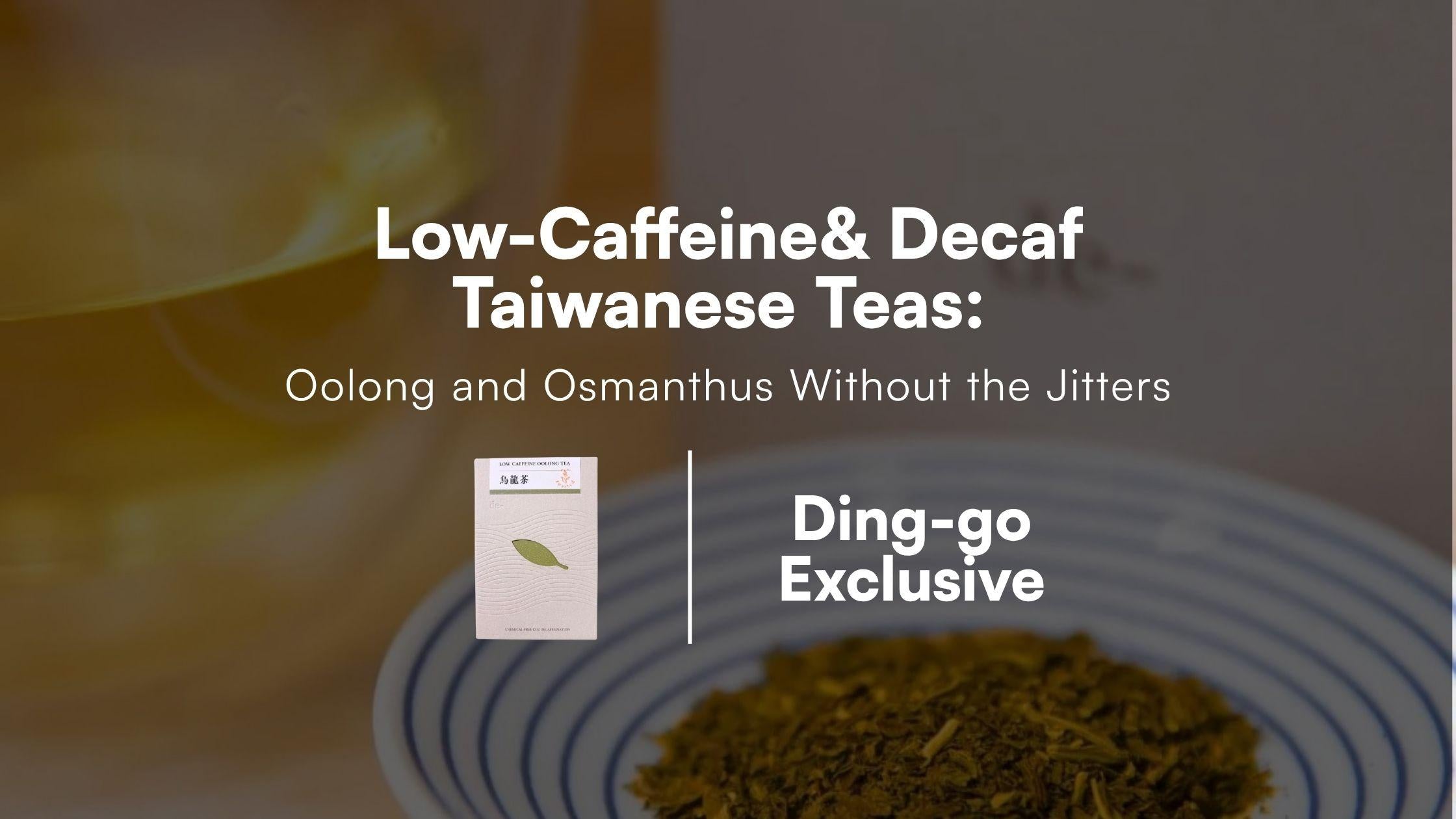
de-tea makes low-caffeine and decaf Taiwanese teas — a way to enjoy real Taiwanese oolong and black tea in the evening, during pregnancy, or any time you're sensitive to caffeine, without giving up flavor. The range runs from a lightly oxidized Baozhong oolong to a roasted oolong to an osmanthus-scented black tea, plus a near-caffeine-free decaf option. This guide explains what makes these teas low-caffeine, how each one tastes, and which to choose.
What makes a tea low-caffeine?
All true tea comes from the same plant and naturally contains caffeine, but the amount varies with the cultivar, how the leaves are processed, and how you brew. de-tea selects varieties and processing that keep caffeine low — including a Guangxi cultivar that's naturally almost caffeine-free — so you can drink a full-flavored cup later in the day. As a rule, shorter steeps and cooler water pull less caffeine, too.
The de-tea range
| Tea | Style | Tastes like | Price |
|---|---|---|---|
| Low-Caffeine Oolong | Baozhong, lightly oxidized (8–12%), unroasted | Fresh, floral, orchid-like | $16 |
| Low-Caffeine Roasted Oolong | Qingxin oolong, slowly roasted | Toasty wood over sweet florals | $18 |
| Low-Caffeine Osmanthus Black | Honey-fragrance black tea + osmanthus | Honeyed, floral, smooth | $18 |
| Decaf Black + Osmanthus (15 bags) | Naturally near-caffeine-free cultivar | Ripe-fruit sweetness, floral | $18 |
How they taste
The unroasted Baozhong oolong is the brightest — fresh and orchid-like — while the roasted oolong layers toasty, woody warmth over that floral sweetness. The osmanthus black pairs honey-fragrance black tea from Nantou with hand-picked osmanthus blossoms from Shiding for a smooth, floral cup, and the decaf black + osmanthus in tea bags is the most convenient, with ripe-fruit sweetness and almost no caffeine.
Who is low-caffeine tea for?
It's for anyone who loves tea but wants to drink it in the evening without affecting sleep, anyone cutting back on caffeine, and anyone who simply prefers a gentler cup. If you're pregnant or managing a health condition, check with your doctor about caffeine, even with low-caffeine and decaf teas.
How to brew
Use water just off the boil for the oolongs and black teas, steep for a couple of minutes, and re-steep the loose-leaf oolongs several times — good Taiwanese oolong gives multiple infusions. For the tea bags, simply steep to taste. Shorter steeps keep the caffeine even lower.
What to pair them with
A low-caffeine tea is the perfect close to a meal — brew a roasted oolong after a rich noodle bowl to cut the richness, or sip the osmanthus black with a sweet mochi or biscuit. As a gift, the teas pair beautifully with a wellness present like Genial Hearten drip chicken essence. In the afternoon, rotate them with a Tea For Us hojicha to keep caffeine in check.
Which should I choose?
Start with the Low-Caffeine Oolong if you like fresh, floral tea, or the Roasted Oolong if you prefer toasty depth. The decaf tea bags are the easiest everyday option and the closest to caffeine-free.
Shop de-tea at Ding-go
Ding-go ships de-tea low-caffeine Taiwanese teas across the US. Want more caffeine-light options or a classic cup? See the Tea For Us matcha & hojicha guide and the Celegusto coffee guide.
FAQ
What makes de-tea low in caffeine?
de-tea selects cultivars and processing that keep caffeine low — including a Guangxi cultivar that's naturally almost caffeine-free — so you can enjoy full-flavored Taiwanese tea later in the day. Shorter steeps and cooler water lower caffeine further.
Is low-caffeine tea the same as decaf?
Not exactly. Low-caffeine tea still contains some caffeine, while the decaf black + osmanthus is made from a cultivar that's naturally almost caffeine-free. Both are gentler than regular tea.
Can I drink these teas at night?
They're designed for evening drinking thanks to their low caffeine, though sensitivity varies. The decaf option is the closest to caffeine-free.
How many times can I re-steep the oolong?
Good Taiwanese loose-leaf oolong gives several infusions — re-steep the leaves multiple times, adjusting steep length to taste.
Is low-caffeine tea safe during pregnancy?
Caffeine intake during pregnancy should be discussed with your doctor. Even with low-caffeine and decaf teas, follow your healthcare provider's guidance.


