


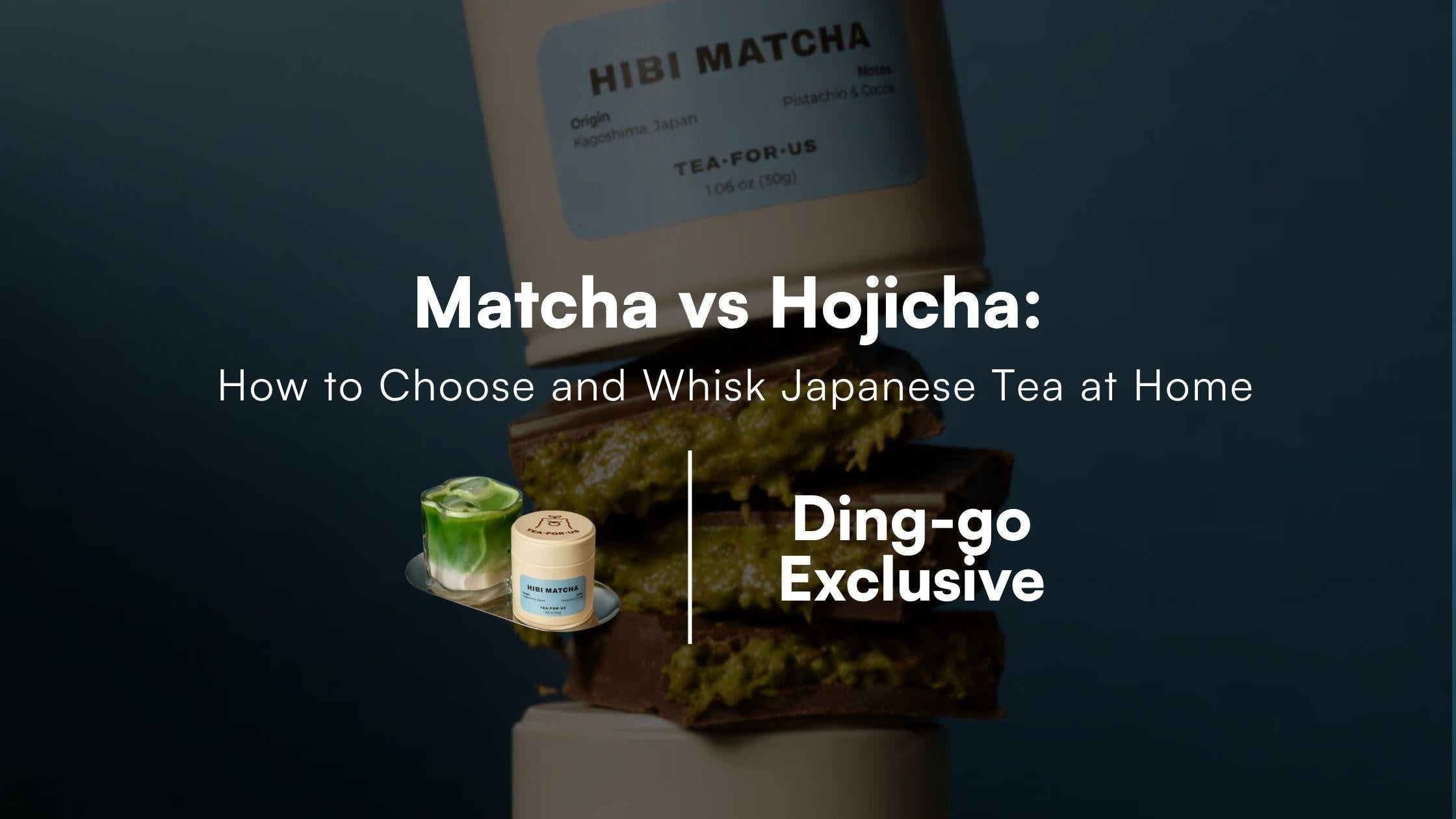
Matcha and hojicha are both Japanese green teas sold as powder, but they sit at opposite ends of the flavor spectrum: matcha is vivid, grassy, and energizing, while hojicha is toasty, mellow, and low in caffeine. Tea For Us makes both — an everyday Hibi Matcha and a Toasty Hojicha — so you can whisk a café-style cup or latte at home. This guide compares the two, shows how to make each, and helps you pick the right one for the moment.
What is matcha?
Matcha is finely milled green tea made from shade-grown leaves, whisked into water rather than steeped and strained. Because you drink the whole leaf, it's vivid green, rich in flavor, and relatively high in caffeine. Tea For Us's Everyday Hibi Matcha ($33) is named for hibi (日々, "day by day") — a smooth, refined matcha made to be part of your daily routine.
What is hojicha?
Hojicha is green tea that's been roasted, which turns the leaves reddish-brown and transforms the flavor into something warm, nutty, and toasty. Roasting also drives off much of the caffeine, so hojicha is a great choice for the afternoon or evening. Tea For Us's Toasty Hojicha ($24) is made from gently toasted leaves grown in Shizuoka, Japan, by a family-run producer.
Matcha vs hojicha, compared
| Matcha | Hojicha | |
|---|---|---|
| Flavor | Grassy, vegetal, umami | Toasty, nutty, mellow |
| Color | Vivid green | Reddish-brown |
| Caffeine | Higher | Low |
| Best for | Morning energy, lattes | Afternoon and evening, lattes |
How to make matcha
Sift about a teaspoon of matcha into a bowl, add a little just-off-boil water (not fully boiling, which can make it bitter), and whisk in a brisk zig-zag with a bamboo whisk until frothy. Drink it straight, or top with hot or cold milk for a matcha latte.
How to make a hojicha latte
Whisk hojicha powder with a small amount of hot water to form a smooth base, then add steamed or cold milk. Because hojicha is naturally low in caffeine and gently sweet, it makes a comforting evening latte that won't keep you up.
What to pair them with
Both powders love a little sweetness alongside — a mochi, wafer, or biscuit from the Ding-go snack aisle is a natural match. Think of them as the caffeine-light side of your day: pair a morning matcha or a Celegusto coffee with breakfast, then wind down with an afternoon hojicha latte or a de-tea osmanthus black tea.
Which should I choose?
Choose matcha if you want a vivid, energizing tea for the morning or a bright green latte. Choose hojicha if you prefer a toasty, mellow, low-caffeine cup you can drink later in the day. Many people keep both and switch by the clock.
Shop Tea For Us at Ding-go
Ding-go ships Tea For Us matcha and hojicha across the US. Building a caffeine-light shelf? Pair them with our de-tea low-caffeine Taiwanese teas, or keep a classic cup on hand with the Celegusto coffee guide.
FAQ
What's the difference between matcha and hojicha?
Matcha is vivid green, grassy, and higher in caffeine; hojicha is roasted green tea that's toasty, mellow, and low in caffeine. Both are sold as powder and whisked into water or milk.
Does hojicha have caffeine?
Hojicha is low in caffeine because roasting drives off much of it, which makes it a good choice for the afternoon or evening.
How do you make matcha without a whisk?
A bamboo whisk gives the best froth, but you can shake matcha with a little water in a sealed jar or use a small electric frother as an alternative.
Is matcha stronger than coffee?
Matcha contains caffeine but typically less per serving than a strong coffee, with a smoother, more sustained feel. Exact amounts vary by preparation.
Can you make a latte with these?
Yes — both make excellent lattes. Whisk the powder with a little hot water first, then add steamed or cold milk.


