



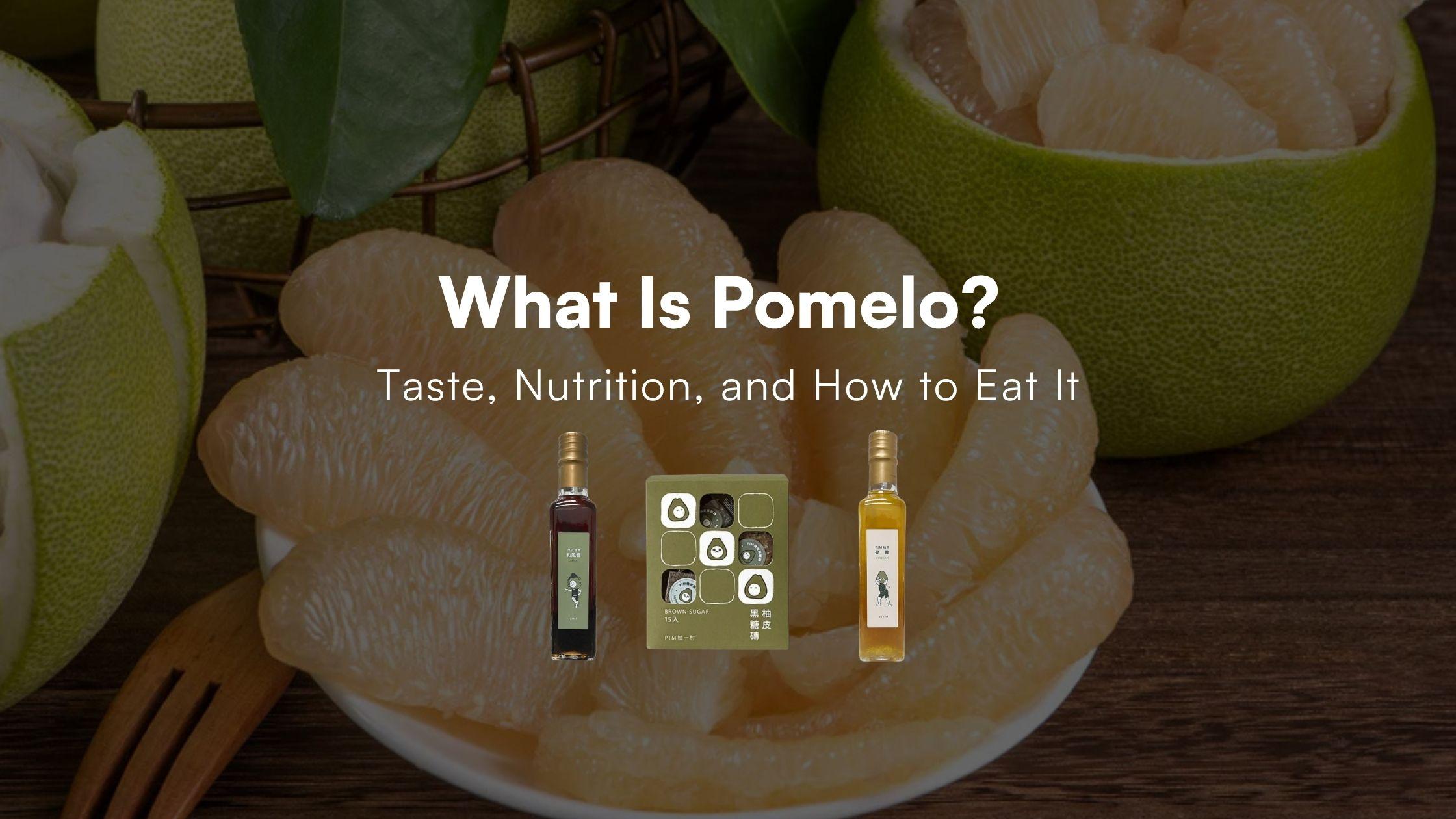
Pomelo is the largest citrus fruit in the world — a pale-green to yellow globe, sometimes bigger than a grapefruit, with a thick spongy rind and sweet, mild, faintly floral flesh. Native to Southeast Asia and a staple across Taiwan and southern China, it tastes like a gentler grapefruit: sweet and refreshing with little of grapefruit's bitterness. You eat the juicy segments fresh — and, increasingly, the fragrant peel gets a second life as a seasoning. Here's what pomelo is, how it tastes, how to peel and eat it, its nutrition, and how cooks use every part of it.
What does pomelo taste like?
Pomelo tastes sweet, mild, and lightly floral, like a grapefruit with the bitterness dialed way down. The flesh is firm and less watery than an orange, so the segments hold their shape and have a pleasant, almost crisp bite. Flavor ranges by variety from honey-sweet to gently tart, but even tart pomelos read as refreshing rather than sour. The thick peel is a different story: it's intensely aromatic — bright citrus oils with a touch of pleasant bitterness — which is why, in Taiwanese kitchens, it's prized rather than thrown away.
How do you eat a pomelo?
Pomelo takes a little work because the rind and pith are thick, but it's simple:
- Score the peel from top to bottom in several places, cutting through the rind but not the flesh.
- Peel back and remove the thick rind and white pith.
- Separate the segments, then peel the tough membrane off each segment to reveal the juicy pulp inside — this membrane is chewy and usually discarded.
- Eat the pulp fresh, add it to salads, or squeeze it for juice.
Because the pulp is firmer than orange, it shines in salads and slaws where it won't turn to mush — and the removed peel is worth keeping, since dried and ground it becomes a fragrant citrus seasoning.
Pomelo vs grapefruit: what's the difference?
Pomelo is one of the parent fruits of the grapefruit (grapefruit is a pomelo–orange hybrid), which is why they look and taste related. In short: pomelo is bigger, sweeter, milder, and less juicy, with a much thicker rind; grapefruit is smaller, juicier, and more bitter-tart. If grapefruit is sometimes too sharp for you, pomelo is the friendlier citrus. The whole family — including the more famous yuzu — is broken down in Pomelo vs Grapefruit vs Yuzu.
Is pomelo good for you?
Pomelo is low in calories and rich in vitamin C, with fiber, potassium, and antioxidants — a nutrition profile similar to other citrus. As with grapefruit, one practical note: citrus in the pomelo/grapefruit family can interact with certain medications, so if you take prescription drugs, check with your pharmacist. Otherwise, it's a hydrating, refreshing, vitamin-rich fruit.
When is pomelo in season?
Pomelo is a fall–winter fruit, peaking from roughly September through February. In Taiwanese culture it's especially tied to the Mid-Autumn Festival, when families eat pomelo after dinner and children famously wear the hollowed peel as a hat. That cultural moment is also the origin story of pomelo-peel seasoning — the tradition of using the whole fruit is explored in Pomelo & the Mid-Autumn Festival.
What do cooks do with pomelo peel?
This is where pomelo gets interesting. The aromatic peel — normally discarded — can be dried, ground, and blended into seasonings that carry pomelo's bright, floral-citrus scent. The Taiwanese brand YOU YI CUN (PIM) built an entire pantry around this idea: a pomelo peel shichimi, a pepper salt, a caramel BBQ rub, an all-purpose seasoning powder, a soy-sauce dressing, a fruit vinegar, and a brown-sugar cube. It sits in the same Taiwanese-seasoning tradition as wasabi pepper salt or salted-egg XO sauce — a finishing touch that wakes up a plain bowl of rice or noodles. If you want the whole story of the range, see the pomelo seasonings guide.
How pomelo shows up on the Taiwanese table
Beyond snacking, pomelo turns up as a flavor across the Taiwanese pantry. Its peel seasons noodles and grilled food; its juice brightens dressings and sauces; and its aroma sweetens drinks — a pomelo brown-sugar cube dropped into a pot of high-mountain oolong is a classic cold-weather cup. It's a good example of a broader Taiwanese habit of using the whole ingredient and layering citrus into savory and sweet alike. For a wider tour of Taiwanese food beyond the fruit, the guide to authentic Taiwanese snacks is a useful starting point.
FAQ
What is a pomelo?
A pomelo is the largest citrus fruit, native to Southeast Asia, with a thick rind and sweet, mild, floral flesh. It's one of the parent fruits of the grapefruit and tastes like a sweeter, less bitter grapefruit.
What does pomelo taste like?
Sweet, mild, and lightly floral — similar to grapefruit but much less bitter, with firmer, less watery flesh that holds its shape in salads.
How do you eat a pomelo?
Score and remove the thick rind and white pith, separate the segments, then peel the chewy membrane off each segment and eat the juicy pulp inside. The pulp is great fresh, in salads, or juiced.
Is pomelo the same as grapefruit?
No. Grapefruit is a hybrid of pomelo and orange. Pomelo is larger, sweeter, milder, and less juicy, with a thicker rind; grapefruit is smaller, juicier, and more bitter.
Is pomelo healthy?
Yes — it's low in calories and high in vitamin C, with fiber and potassium. Like grapefruit, it can interact with some medications, so check with a pharmacist if you take prescription drugs.
What do you do with pomelo peel?
The fragrant peel can be dried and ground into citrus seasonings. Taiwanese makers like YOU YI CUN turn it into shichimi, pepper salt, BBQ rub, and more — an upcycled, whole-fruit way to use it.
When is pomelo in season?
Pomelo ripens in early-to-mid autumn and stays in season through winter, which is why it's associated with the Mid-Autumn Festival.


